
For 10 days in April, I made the Artemis II mission my entire personality.
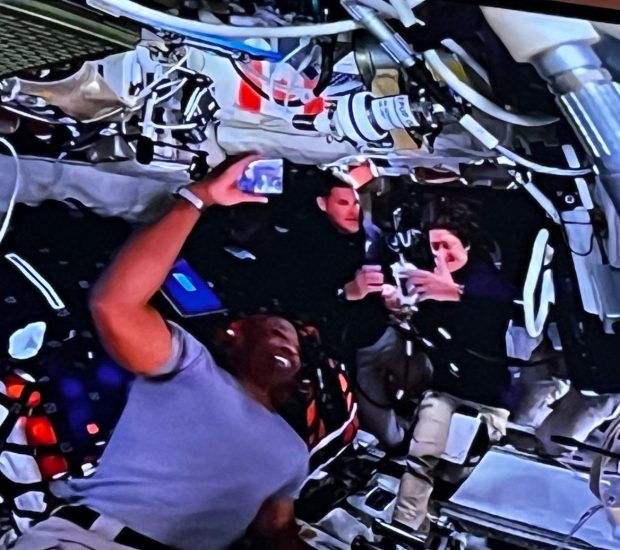
I tuned in every morning to hear the crew’s wake-up song from NASA’s official playlist, and kept the live feed on all day via desktop or tv like a police scanner. The booster jettison, the naming of Carroll Crater, the unceremonious omission of Pink Pony Club’s chorus…I was there in real time for it all. It made me feel human, connected, and ironically grounded as we floated along with Reid, Victor, Christina, and Jeremy.
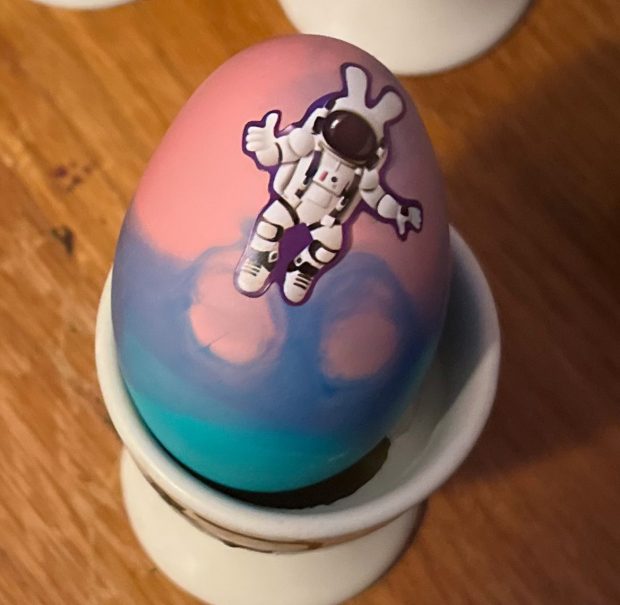
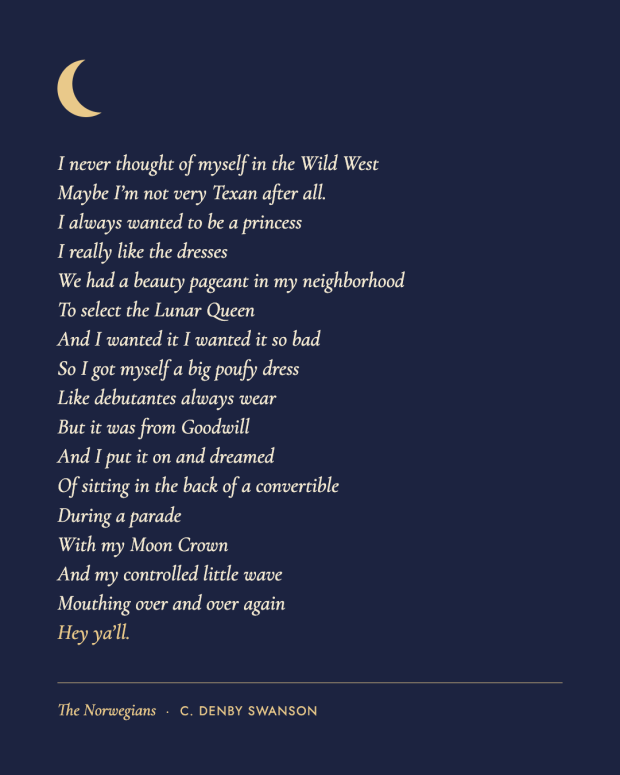
Indeed, lunar fever had infiltrated every part of my life, and I could see it everywhere. The Easter eggs took on an astronaut theme as we dyed them. Skimming scripts at my theater-company job, I paused on moon mentions I found in the lines, as in C. Denby Swanson’s The Norwegians (“We had a beauty pageant in my neighborhood, to select the Lunar Queen. And I wanted it I wanted it so bad…”).
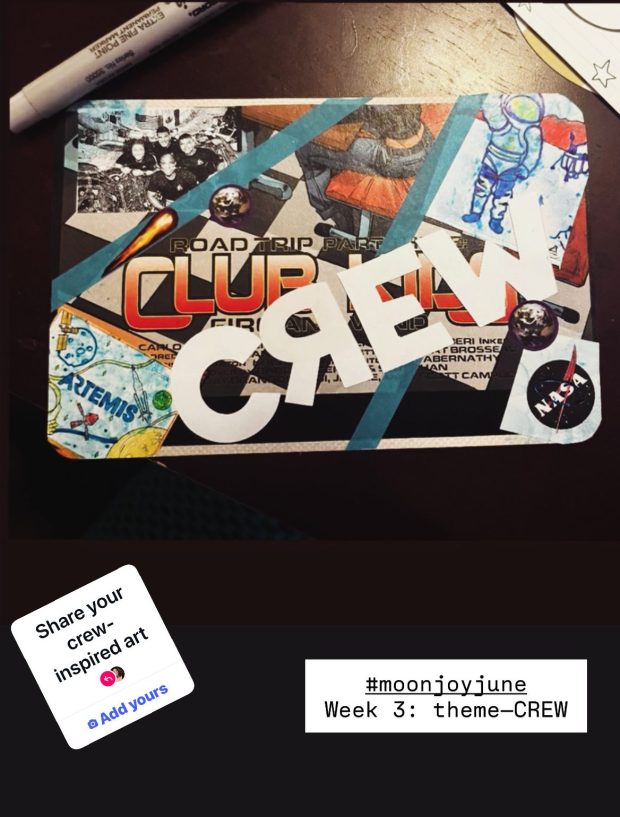
Splash down was a moment of elation, followed not long after by a sense of denouement. Unready to let the moonlight fade, I followed the crew on their media junkets, continued to play their Morning Mix (Sleepyhead by Young & Sick is my favorite), and when summer came I joyfully crafted my way through NASA’s Artemis-inspired art project Moon Joy June.
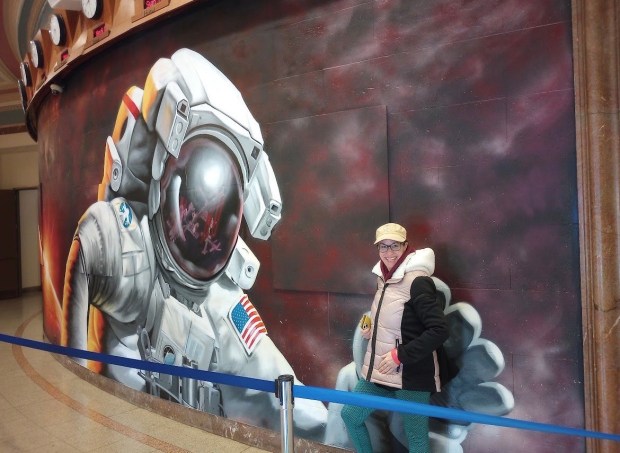
A family trip to Philadelphia brought with it a visit to the Franklin Institute, and I was elated to discover it has a two story space and science exhibit.
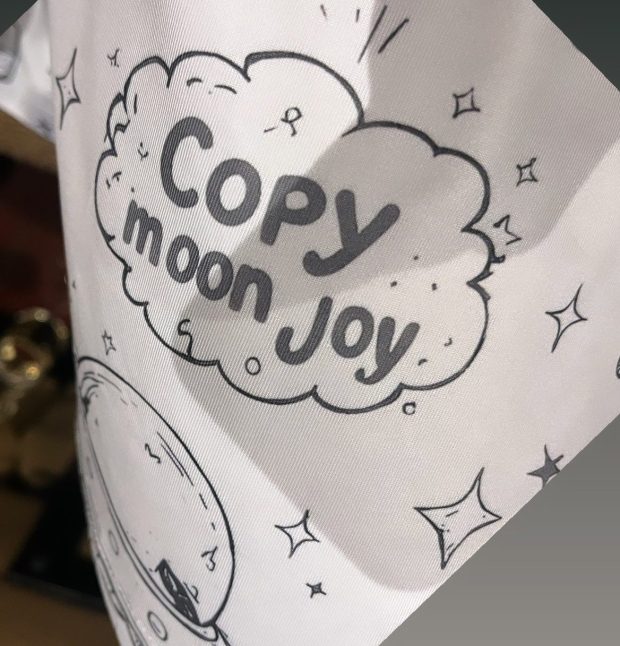
Even a gala I attended had a celestial theme complete with crescent moons and starry skies projected on deep purple and blue ceilings. In a sort of self-imposed show of solidarity, I veered away from the more ball-appropriate gowns and opted to doll up a skater dress with the words Copy, Moon Joy emblazoned on every inch instead.
I feared no one would understand the reference as they walked by with glittering stars in their hair and sky-blue dresses. But as I made my way into the venue, an exclamation came from behind me, followed by hurried footsteps headed in my direction.
“Your dress! Copy Moon Joy! Oh, I just loved watching that mission, it was so exciting.”
What a relief to know there are more Artemisians out there. What a joy to know we are One Crew.

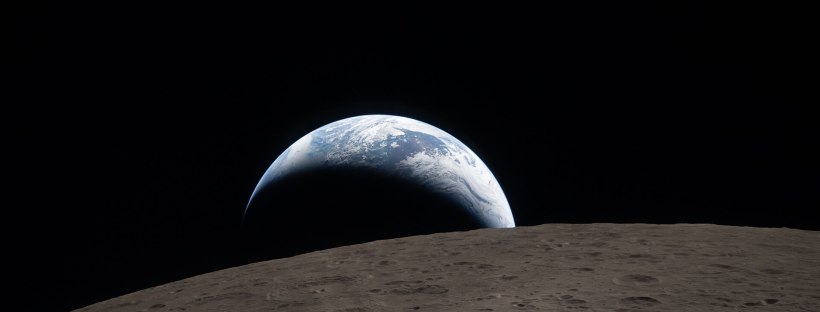
Featured photo information: Earthset, by astronaut Christina Koch. Captured through the Orion spacecraft window at 6:41 p.m. EDT, April 6, 2026, during the Artemis II crew’s flyby of the Moon. A muted blue Earth with bright white clouds sets behind the cratered lunar surface. The dark portion of Earth is experiencing nighttime. On Earth’s day side, swirling clouds are visible over the Australia and Oceania region. In the foreground, Ohm crater has terraced edges and a flat floor interrupted by central peaks. Central peaks form in complex craters when the lunar surface, liquefied on impact, splashes upwards during the crater’s formation.


